Anxiety assumes many forms, including generalized anxiety disorder, phobias, panic attacks, and obsessive-compulsive disorders. Herbs for anxiety alleviate symptoms and encourage the body's chemistry to rebalance.
St. John's Wort
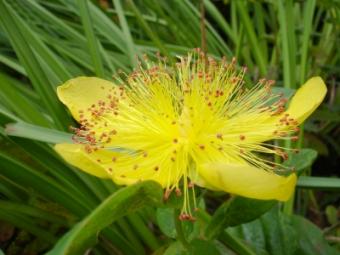
St. John's Wort (Hypericum perforatum) provides long-term treatment of many anxiety disorders. Medicinal use of St.John's Wort traces back to ancient Greece, where physicians recorded using the plant to treat anxiety, depression and nerve pain. Today it is available at health food stores and places where herbs are sold.
St. John's Wort is taken as a tincture, mixed with water according to directions from a qualified herbalist, or in pill or capsule form. Teas may also be brewed from the dried flowers of Hypericum. Herbalists generally recommend tinctures, since the quality of St. John's Wort degrades and capsules may contain aged, dried leaves with less potency. Users must be patient, as St. John's Wort can take several weeks to have any effect.
Effectiveness
The National Center for Complementary and Integrative Health (NIH) indicates that studies on St. John's Wort show mixed results. One German study showed St. John's Wort to be as effective as prescription antidepressants against mild to moderate depression; however, U.S. studies did not show the herb to be any more effective than a placebo.
NIH cautions users that St. Johns Wort interferes with many prescription medications, including:
- Antidepressants
- Birth control pills
- Cyclosporine (used by organ transplant patients to guard against rejection)
- Digoxin (heart medication)
- Warfarin and other anticoagulant drugs.
Precautions
While many people assume that an herbal preparation is safer than a prescription medication, never take St. John's Wort without consulting an herbalist or naturopathic physician. St. John's Wort treats minor depression and anxiety, but may not be able to alleviate severe depression. Always seek qualified medical or psychiatric advice if you suffer from depression; untreated depression may lead to severe illness.
St. John's Wort causes photosensitivity, or sensitivity to sunlight, in some patients. If taking St. John's Wort, be sure to use sun block or cover up with loose clothing when outdoors. Even people who normally tan may find themselves burning, and sunburned skin adds to one's skin cancer risk.
Kava Kava
Kava Kava (Piper methysticum) hails from the South Pacific and reduces anxiety while promoting relaxation. South Pacific natives used Kava as a ceremonial beverage for many centuries, enjoying its relaxing properties. If your anxiety makes you feel jittery and causes insomnia, Kava provides relief.
A Short-Term Solution
Users consume Kava as a beverage, tea, tincture or pill. Never use Kava for long-term therapy.
Use Kava with caution. Kava Kava may cause side effects. The FDA issued warnings on Kava after some users exhibited signs of liver damage. Kava also interacts with many prescription medications, particularly those used to treat Parkinson's disease. Since Kava induces sleepiness, do not take Kava before driving or operating machinery.
Chamomile
Roman chamomile (Chamaemelum nobile), a sweet smelling herb with daisy-like white flowers, is believed to have a mild sedative effect on the body which may help ease anxiety. Traditionally, the herb has also been used to help promote sleep and ease digestive and menstrual symptoms. Chamomile is easily grown and can be dried for use in teas or you can find chamomile supplements at your local natural health store.
NIH recently funded a study which showed chamomile capsules helped relieve the effects of generalized anxiety disorder with few side effects.
Lavender
Known for its intoxicating scent, beautiful blue-purple flowers and silvery leaves, lavender (Lavandula angustifolia) has been used in aromatherapy to ease tension and anxiety for centuries. The herb is found in personal care and beauty products, teas, tinctures, oils, and infusions.
Lavender aromatherapy potentially slows the nervous system and promotes relaxation. In addition, people undergoing massage with lavender essential oil showed reduced anxiety and improved concentration.
Passionflower
Passionflower (Passiflora incarnata) is a vine-like herb with brilliant purple, blue or pink flowers. PennState Hersey indicates that the herb may work as well as prescription medications to reduce anxiety symptoms related to generalized anxiety disorder and narcotic drug withdrawal. Passion flower is usually found in liquid extract or tablet forms.
Serious potential side effects of passion flower include:
- Sleepiness
- Dizziness
- Confusion
- Inflamed blood vessels
- Altered consciousness
The risk of developing these effects is increased if the herb is taken in large amounts, used for long periods of time, or taken with sedative medications.
Valerian
Valerian (Valerian officianalis) is a shrubby perennial that sports pink or white lacy flowers with a distinctive, sweet scent. Our ancestors grew Valerian as an ornamental flower, perfume, and medicinal herb. Hippocrates and Galen, two well-known ancient Greek physicians, wrote extensively about the powers of Valerian.
Valerian roots and rhizomes are dried and crushed into teas, tinctures, powders and pills. Valerian's primary activity is as a sedative, causing sleepiness and reducing anxiety. Scientific research indicates that Valerian acts upon GABA, a neurotransmitter in the brain associated with anxiety and depression. Users may feel Valerian's sedative action immediately or need to take it for a week or more before experiencing relief.
Compared to many other herbs for anxiety, Valerian appears have few side effects. Few adverse reactions occur, the most common being excessive sleepiness.
Safely Use Herbal Remedies
Herbal remedies offer people a viable alternative to prescription anxiety drugs that may have strong side effects. However, it's important to remember that herbs contain powerful properties and should be used with caution. Herbal remedies can interact with foods or medications with potentially dangerous results.
Before using any herb to treat anxiety, consult your doctor or a licensed herbalist or naturopath, especially if you are pregnant, breastfeeding, or have other medical conditions.


